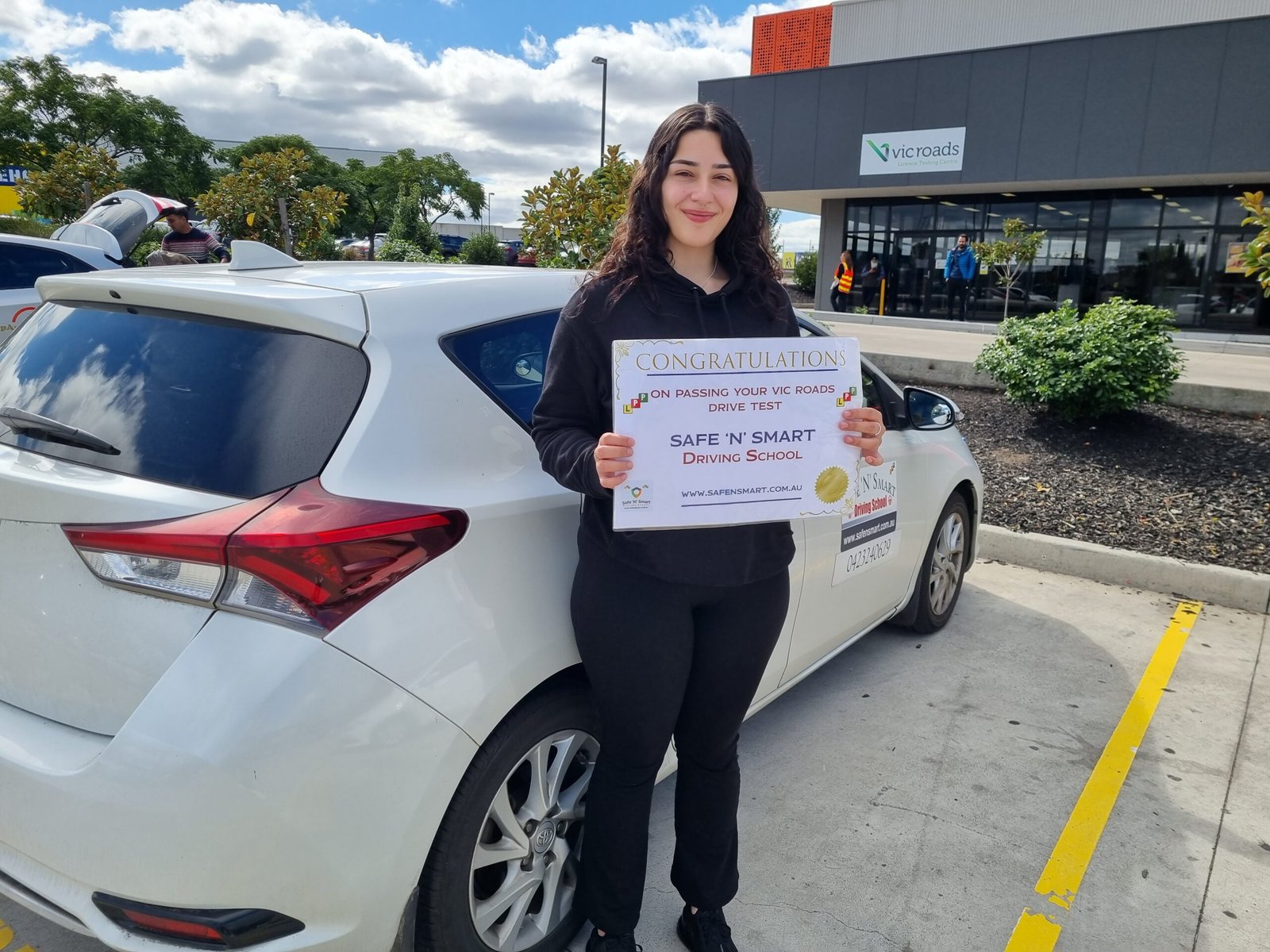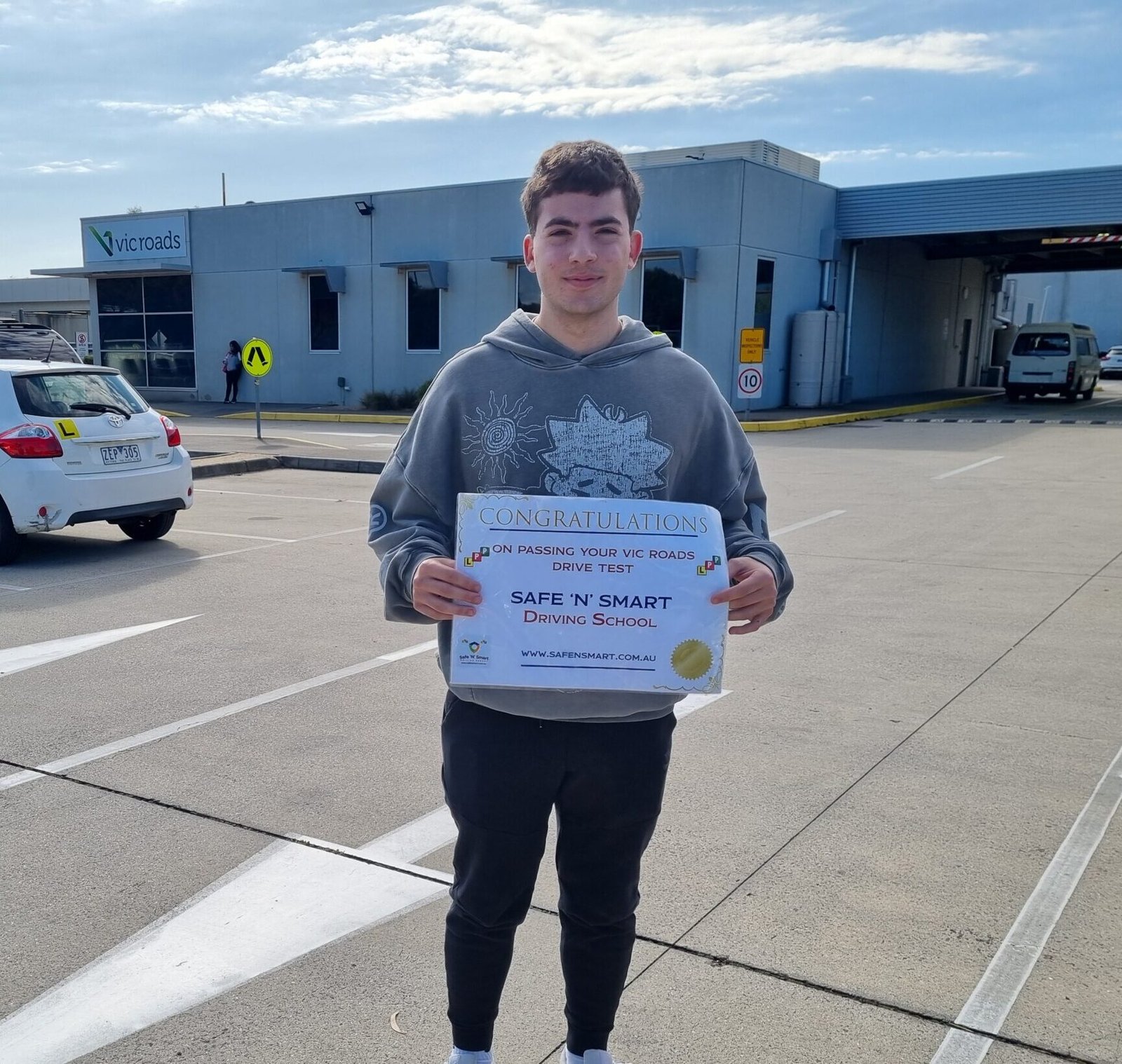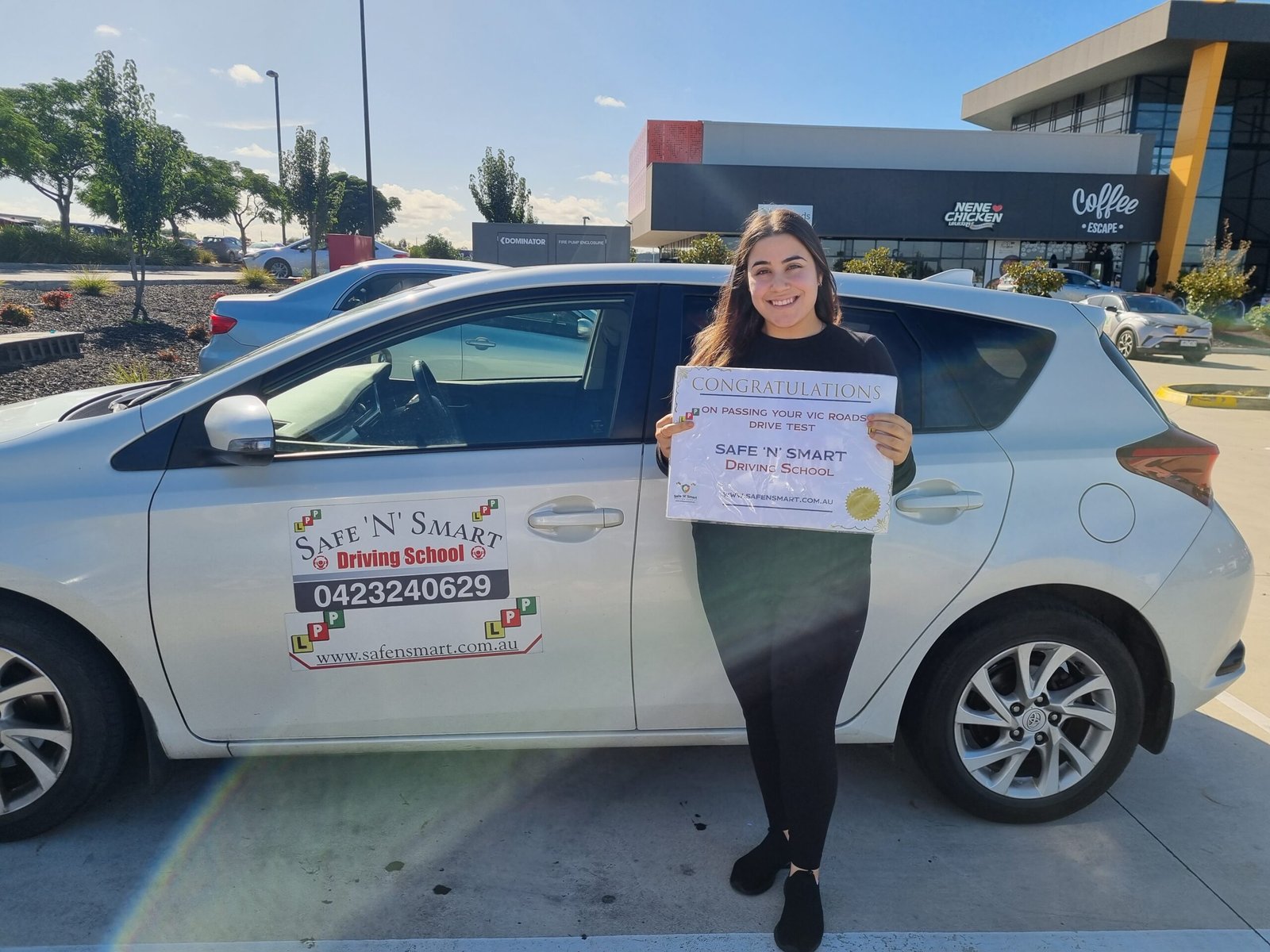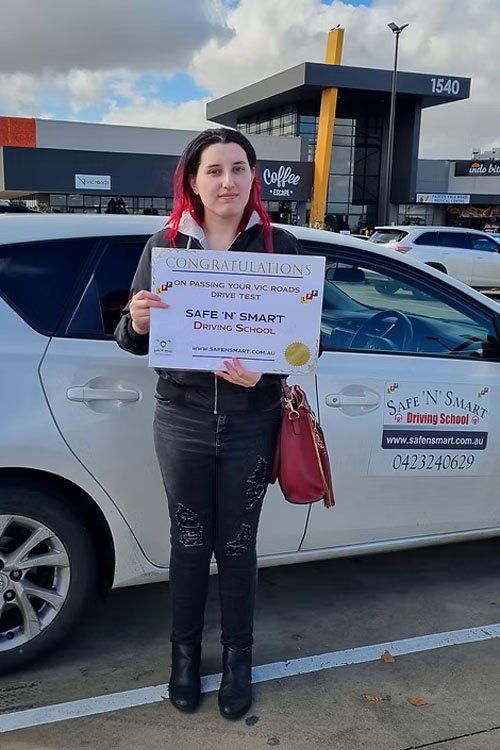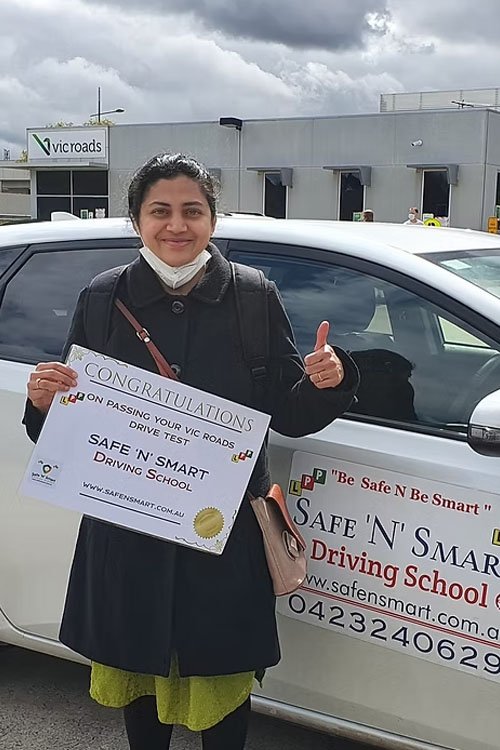
How to Pass Your VicRoads Driving Test in Victoria on Your First Attempt
Passing your VicRoads driving test in Victoria is an important milestone towards becoming an independent and confident driver. Whether you are a learner driver preparing to move from your L plates to P plates or an overseas licence holder converting your international driving licence, understanding the Victorian driving test requirements can significantly improve your chances of success.
Many learner drivers feel nervous about their practical driving assessment. However, with professional driving lessons, proper preparation, an understanding of Victorian road rules and safe driving habits, you can approach your VicRoads driving test with greater confidence.
At Safe N Smart Driving School, we help learner drivers develop the skills needed to drive safely and confidently on Melbourne roads. Our professional driving lessons focus on practical driving skills, hazard awareness, road rule compliance and preparation for the VicRoads driving assessment.
Whether you are looking for driving lessons in Bundoora, Coolaroo, Mill Park, Epping, Wollert, Craigieburn or Melbourne’s northern suburbs, this comprehensive guide explains what you need to know before attending your driving test.
What Is the VicRoads Driving Test?
The VicRoads Drive Test is a practical on-road assessment designed to determine whether a learner driver can operate a vehicle safely, follow Victorian road rules, identify potential hazards and make appropriate driving decisions in real traffic conditions.
The test is not simply about controlling a vehicle. Your driving assessor evaluates your ability to demonstrate safe and independent driving while interacting with other vehicles, pedestrians, cyclists and changing road conditions.
The assessment includes a pre-drive safety check and two on-road assessment stages.
Understanding what happens during each stage can help you avoid unnecessary mistakes and prepare effectively.
Understanding the Two Stages of the VicRoads Drive Test

1. Pre-Drive Check
Before driving, the testing officer checks whether you can identify and operate important vehicle safety controls. The vehicle must also meet test requirements.

2. Stage One – Basic Driving Skills
Stage One generally assesses your driving in lower-speed environments, including intersections, turns, observation, positioning and low-speed manoeuvres.

3. Stage Two – More Complex Traffic Conditions
Stage Two assesses safe driving in more demanding traffic situations, including lane changes, traffic lights, busy intersections and higher-speed roads where applicable.
You must successfully complete Stage One before proceeding to Stage Two.
25 Expert Tips to Pass Your Drive Test in Victoria
1. Choose a Professional Driving Instructor
One of the most effective ways to prepare for your VicRoads driving test is to take lessons with an experienced driving instructor.
A qualified driving instructor can identify unsafe driving habits, explain road rules, help improve observation techniques and prepare you for the assessment.
At Safe N Smart Driving School, our driving lessons in Melbourne’s northern suburbs focus on developing safe driving skills rather than simply memorising test routes.
2. Complete Your Required Driving Experience
Learner drivers under 21 generally need to complete at least 120 hours of supervised driving, including 20 hours at night, before taking their practical driving test.
Learners aged 21 or older do not generally have the same 120-hour requirement, although minimum learner permit holding periods still apply.
More importantly, driving experience should include residential streets, busy intersections, wet weather, night-time driving and roads with different speed limits.
3. Pass Your Hazard Perception Test Before Booking
Before attending your VicRoads practical driving test, you must satisfy the applicable Hazard Perception Test requirements.
The Hazard Perception Test assesses your ability to recognise and respond appropriately to potentially dangerous road situations.
Practise identifying pedestrians, cyclists, approaching vehicles, intersections and changing traffic conditions.
4. Practise the VicRoads Pre-Drive Check
The pre-drive check is an essential part of the practical driving assessment.
Before beginning your drive test, you may be asked to demonstrate the operation of various vehicle controls.
Familiarise yourself with:
-
Left and right indicators
-
Brake lights
-
Headlights and high beam
-
Hazard warning lights
-
Windscreen wipers and washers
-
Front and rear demisters
-
Horn
-
Parking brake
Ensure that you can locate and operate these controls without confusion. Your instructor should help you practise the pre-drive check using the same vehicle you intend to use for the test.
5. Always Check Your Blind Spots
Failing to perform appropriate head checks is a common driving test mistake.
Blind spots cannot always be seen through mirrors alone. When required, turn your head to check for vehicles, motorcycles and cyclists before moving.
Important situations include changing lanes, merging, moving away from the kerb and other movements where a blind-spot check is necessary.
Remember that checking your mirrors does not replace checking your blind spots.
6. Use Your Mirrors Correctly
Your testing officer will assess how effectively you monitor the surrounding traffic.
Develop the habit of checking your mirrors regularly and before important driving actions, including slowing down, braking, changing lanes and turning.
Avoid staring into mirrors for too long. Your attention must remain primarily on the road ahead.
7. Maintain the Correct Speed
Speed management is one of the most important skills for passing the Victorian driving test.
Always observe posted speed limits and adjust your speed according to traffic, visibility, weather and road conditions.
Driving too fast can result in a serious test error. However, unnecessarily driving too slowly can also demonstrate poor traffic judgement.
According to VicRoads, exceeding the speed limit by 5 km/h or more, exceeding it for five seconds or more, or exceeding a school-zone speed limit by any amount can result in immediate test termination.
8. Come to a Complete Stop at Stop Signs
A STOP sign requires your vehicle to come to a complete stop.
Slowly rolling through a STOP sign without fully stopping is not acceptable.
Stop at the appropriate stopping position, check for approaching traffic and pedestrians, and proceed only when safe.
A rolling stop can be recorded as a critical error, while more dangerous failures to stop or give way can lead to immediate termination.
9. Understand Give Way Rules
Giving way correctly is essential for passing your VicRoads driving test.
Practise intersections, roundabouts, T-intersections, pedestrian crossings and turning movements.
Do not assume another driver will slow down or give you priority. Make safe decisions based on the road rules and actual traffic conditions.
10. Practise Safe Right Turns
Right turns at busy intersections can be challenging for learner drivers.
When turning right, assess approaching traffic, identify safe gaps and remain aware of pedestrians and cyclists.
Avoid rushing because another driver is waiting behind you.
A safe decision is always more important than completing the turn quickly.
11. Master Roundabouts
Roundabouts are frequently encountered during driving lessons and practical assessments.
Before entering a roundabout, reduce your speed, identify the appropriate lane, signal as required and give way according to Victorian road rules.
Practise entering, exiting and navigating multilane roundabouts confidently.
12. Use Indicators at the Correct Time
Indicators communicate your intentions to other road users.
Signal appropriately when turning, changing lanes, merging, leaving the kerb and performing other movements that require indication.
Indicating does not give you the right of way. Always check that the movement is safe before proceeding.
13. Maintain Correct Lane Position
Your vehicle should remain appropriately positioned within the lane.
Avoid driving too close to parked vehicles, crossing lane markings unnecessarily or drifting towards the centre of the road.
Maintain a safe distance from obstacles while remaining within the correct lane.
14. Practise Safe Lane Changes
Lane changes require planning, observation and judgement.
Before changing lanes, check your mirrors, signal appropriately, perform a head check where required and move only when a safe gap is available.
Avoid forcing your way into traffic or making sudden steering movements.
15. Keep a Safe Following Distance
Following another vehicle too closely reduces your available reaction time.
In good conditions, use an appropriate following gap, commonly at least two seconds, and increase it when roads are wet, visibility is reduced or traffic conditions require extra caution.
Your driving assessor wants to see that you can anticipate traffic changes and respond safely.
16. Be Extra Careful Around School Zones
School zones require particular attention because speed limits can change according to the time and location.
Watch for school-zone signs, children, pedestrians and parked vehicles.
Always follow the applicable speed limit, even when surrounding drivers are travelling faster.
17. Practise Reverse Parallel Parking
Reverse parallel parking is an important low-speed driving skill.
Practise controlling your vehicle at a slow speed, observing surrounding traffic, checking blind spots and positioning your vehicle safely.
Avoid relying only on a reversing camera. Use direct observation and mirrors as appropriate.
A small parking mistake does not necessarily mean automatic failure, but mounting the kerb or creating a dangerous situation can result in a serious error.
18. Learn the Three-Point Turn
A three-point turn, also called a turnabout, may be included in your assessment.
Practise choosing a safe location, checking for traffic and pedestrians, signalling appropriately and controlling the vehicle during forward and reverse movements.
Do not rush. Safety and observation are more important than speed.
19. Watch for Pedestrians and Cyclists
Pedestrians and cyclists can be particularly vulnerable around intersections, shopping centres, schools and residential streets.
Look carefully before turning, reversing, opening doors or moving across a bicycle lane.
Never proceed when doing so would fail to give way or create a collision risk.
20. Practise Driving Around Your Preferred Test Centre
Familiarity with local road conditions can improve confidence during your VicRoads driving test.
If you are preparing for a drive test in Bundoora, Coolaroo or another Melbourne testing area, practise a variety of nearby road conditions.
Focus on roundabouts, traffic lights, lane changes, changing speed limits, residential streets and busy intersections.
Actual VicRoads test routes may vary. Learning safe driving skills is more valuable than memorising a particular route.
21. Take a Mock Driving Test
A mock drive test is an excellent way to assess whether you are ready for your practical assessment.
Your driving instructor can simulate test conditions by providing directions while observing your driving performance.
A mock test can help identify weaknesses in observation, speed management, road positioning, parking and decision-making.
Use the feedback to guide your remaining driving lessons.
22. Stay Calm When You Make a Minor Mistake
Many learners become nervous after making a small mistake during their driving test.
Not every mistake results in an automatic failure.
If you make a minor error, remain focused and continue driving safely. Avoid trying to compensate with sudden or risky movements.
Your overall driving performance and the seriousness of any errors determine the result.
23. Listen Carefully to the Testing Officer
During the test, the testing officer will provide directions about where to drive.
Listen carefully and follow the instructions when safe and legal.
If you do not understand a direction, ask for clarification rather than guessing.
Never make an unsafe turn or lane change simply because you believe you must follow an instruction immediately.
24. Prepare Your Vehicle Before Test Day
Your test vehicle must meet the applicable VicRoads requirements.
Before attending, check that the vehicle is roadworthy, the required lights and safety controls work, and it satisfies the relevant test vehicle conditions.
VicRoads does not supply a vehicle for your driving test, so you must arrange an eligible car yourself.
25. Book a Final Driving Lesson Before Your Test
A final driving lesson can help reinforce safe driving habits and improve confidence.
During this lesson, revise the pre-drive check, lane changes, parking manoeuvres, intersection observations and common driving test mistakes.
At Safe N Smart Driving School, our VicRoads drive test preparation lessons are designed to help learners identify areas for improvement before their practical assessment.
How Many Mistakes Are Allowed in the VicRoads Driving Test?
The VicRoads driving test uses an assessment system that distinguishes between ordinary assessable driving errors, critical errors and immediate termination errors.
A critical error is a serious mistake that creates potential risk without meeting the threshold for immediate termination.
Under the published VicRoads Drive Test criteria, the test is terminated if you commit:
-
Two critical errors during Stage One, or
-
Three critical errors across the entire test, or
-
One immediate termination error at any stage.
For example, if you make two critical errors during Stage One, your test may end before you reach Stage Two. This is why some learner drivers fail their VicRoads driving test within the first 10 minutes of on-road driving.
These limits do not mean every other mistake is permitted. The assessment also considers individual driving tasks and safe driving performance.
Common Reasons Learner Drivers Fail Their VicRoads Driving Test
| Driving mistake | Why it matters |
|---|---|
| Failing to check blind spots | May create a collision risk |
| Exceeding the speed limit | Can result in immediate termination |
| Rolling through a STOP sign | May result in a critical or more serious error |
| Failing to give way | Can endanger other road users |
| Incorrect lane changes | Demonstrates unsafe observation or judgement |
| Mounting the kerb | May be a critical or immediate termination error, depending on circumstances |
| Inadequate pedestrian observation | Can result in a dangerous situation |
| Driving too slowly without reason | May be recorded as a critical error |
| Poor vehicle control | May affect safe driving assessment |
The seriousness of an error depends on the specific circumstances and official assessment criteria.
How to Prepare for Your VicRoads Drive Test: Test Day Checklist
Your drive test preparation
0 of 8 completed
VicRoads recommends arriving at least 15 minutes before your appointment.

How Many Driving Lessons Do You Need to Pass Your Drive Test in Victoria?
The number of driving lessons required depends on your experience, confidence, ability to follow road rules and overall driving performance.
Beginner drivers may need regular professional lessons alongside supervised practice. Drivers who have already completed extensive driving experience may require fewer lessons focused on correcting habits and preparing for the assessment.
Overseas licence holders may benefit from lessons covering Australian road rules, local driving conditions and VicRoads assessment expectations.
There is no guaranteed number of lessons that will ensure a first-attempt pass. A professional driving instructor can assess your driving and recommend suitable preparation.
Is the VicRoads Drive Test Easier at Bundoora or Coolaroo?
Learner drivers often ask whether the VicRoads driving test is easier at Bundoora, Coolaroo or another Melbourne testing centre.
There is no officially designated easiest VicRoads testing centre. The same fundamental assessment standards apply, although traffic conditions, intersections and road layouts can differ.
Drivers preparing for a test in Bundoora should be comfortable navigating busy roads, roundabouts, traffic lights and residential streets.
Similarly, drivers preparing for a test in Coolaroo should practise lane changes, speed management, intersection observation and safe driving around surrounding traffic.
The best test centre is generally one where you can attend conveniently and have sufficient opportunity to practise the relevant driving conditions.
Can You Use a Driving Instructor’s Car for the VicRoads Drive Test?
Yes. You can use an eligible driving instructor’s vehicle for your VicRoads drive test.
Many learner drivers prefer using a familiar training vehicle because they already understand its steering, brakes, mirrors, controls and parking characteristics.
If you are booking a driving test package, ask whether the package includes a pre-test lesson, vehicle use during the assessment and travel to the testing centre.
Safe N Smart Driving School can explain its available lesson and drive test packages when you enquire.
Overseas Licence Conversion in Victoria
If you hold an overseas driving licence and need to convert it to a Victorian licence, your requirements may differ depending on the country that issued your licence, your age, licence history and VicRoads recognition rules.
Some overseas licence holders must complete knowledge testing, a Hazard Perception Test and a practical Drive Test.
Professional driving lessons can help overseas drivers become familiar with Victorian road rules, Australian driving conventions, school zones, roundabouts, lane discipline and local road conditions.
Safe N Smart Driving School provides driving instruction suitable for drivers preparing for an overseas licence conversion assessment.
Why Choose Safe N Smart Driving School for VicRoads Drive Test Preparation?
Choosing the right driving school can make a significant difference to your confidence and preparation.
At Safe N Smart Driving School, our aim is to help learners become confident, responsible and safe drivers.
Our driving lessons focus on:
-
Professional instruction tailored to individual driving abilities.
-
Safe driving techniques and practical road rule knowledge.
-
VicRoads drive test preparation and mock assessments.
-
Improving confidence with parking, lane changes and intersections.
-
Support for beginner drivers and overseas licence conversion.
-
Flexible driving lesson and test preparation packages.
Whether you are searching for a driving school near me, driving lessons in Bundoora, driving school Coolaroo or VicRoads drive test preparation in Melbourne, Safe N Smart Driving School can help you work towards your driving goals.
Frequently Asked Questions About Passing the VicRoads Driving Test in Victoria
How can I pass my VicRoads driving test on the first attempt?
Practise consistently, understand Victorian road rules, develop strong observation habits and complete mock driving tests. Focus on speed management, giving way, head checks, parking and safe decision-making.
What is an instant fail in a Victorian driving test?
An immediate termination error includes serious unsafe actions such as running a red light, dangerous failure to give way, certain speeding offences, mounting the kerb while driving or creating a situation that requires another road user to avoid a collision.
Can I fail the VicRoads drive test in the first 10 minutes?
Yes. Two critical errors during Stage One or one immediate termination error can cause the test to end early.
Is reverse parallel parking compulsory in the VicRoads driving test?
You should prepare for reverse parallel parking and other low-speed manoeuvres. The particular manoeuvre assessed can vary, so do not assume that parallel parking will always be included.
Is hitting the kerb an automatic fail?
It depends on the circumstances. Mounting the kerb while driving can result in immediate termination, while allowing one wheel to mount the kerb during a parking manoeuvre may be recorded as a critical error.
How long does the VicRoads driving test take?
The test includes a pre-drive check and two on-road stages. Allow sufficient time for check-in, the assessment and feedback. Actual duration can vary depending on test conditions and whether the assessment is terminated early.
Can I use my own car for the VicRoads driving test?
Yes, provided the vehicle meets the applicable test requirements. You can also use an eligible driving instructor’s car. VicRoads does not provide test vehicles.
How can I overcome driving test nerves?
Practise regularly, become familiar with the vehicle, take a mock test and focus on driving safely rather than trying to achieve a perfect performance. Getting enough rest before the test can also help.
Do I need 120 hours of driving experience to take the test?
If you are under 21, you generally need 120 hours of supervised driving, including 20 hours at night. Different requirements apply to older learners and some exempt applicants.
Can overseas licence holders take driving lessons before the VicRoads test?
Yes. Overseas licence holders can benefit from professional driving lessons to understand Victorian road rules, practise safe driving techniques and prepare for the practical assessment.
What should I do if I fail my VicRoads driving test?
Review your assessor’s feedback, identify the mistakes that contributed to the unsuccessful result and practise those skills with a driving instructor before rebooking.
Book Your VicRoads Drive Test Preparation Lessons with Safe N Smart Driving School
Ready to move from your L plates to P plates?
Whether you are preparing for your first VicRoads driving test, returning after an unsuccessful attempt or converting an overseas driving licence, Safe N Smart Driving School can help you build the skills and confidence needed for safe independent driving.
We provide driving lesson options for learners across Melbourne’s northern suburbs, including Bundoora, Coolaroo, Mill Park, Epping, Wollert and surrounding areas, subject to availability.
Book your driving lessons with Safe N Smart Driving School today and take the next step towards passing your VicRoads drive test in Victoria.
Official VicRoads Resources
For the latest test requirements, eligibility rules and vehicle conditions, refer to the official Victorian Government resources: